£0.00

WINCHING GUIDES
Tractor and Forestry Winches: How PTO Logging Winches Work and How to Use Them Safely
Do You Need a Winch Cover? What They Protect, Which Type, and What to Watch For
Winch Hooks Explained: Types, Latches, Inspection and When to Replace
12V vs 24V Winch: Which Voltage Do You Actually Need?
Hydraulic vs Electric Winch: Which One Suits Your Work?
Winch Anatomy & How It Works
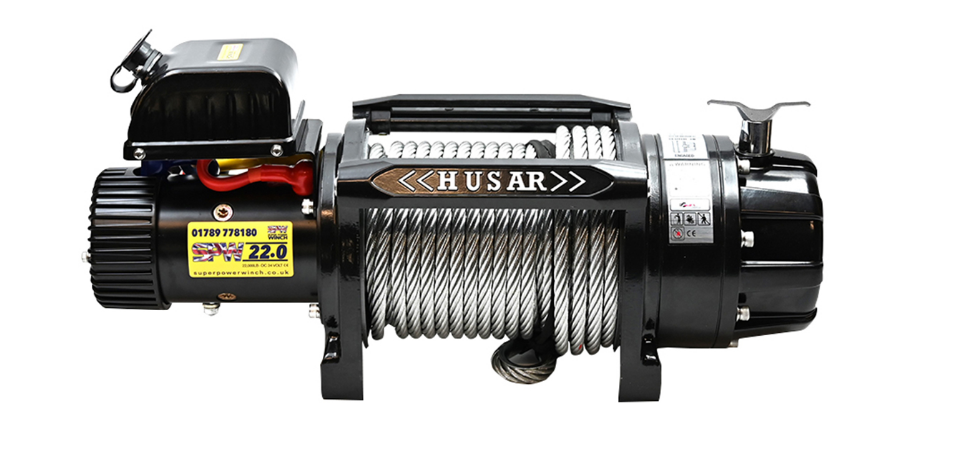
1. Winch Drum
The cylindrical drum stores the cable or rope, winding it cleanly during operation. Essential for efficient spool control.
2. Gear Train
Reduces motor speed, increasing torque for smooth, powerful pulling. Planetary gear systems are a popular, durable choice.
3. Clutch
Locks the motor shaft to the drum, preventing unintended free-spooling—an important safety feature.
4. Cable Guide (Hhawse or Fairlead)
Ensures the line winds evenly, avoiding overlap that could unbalance the load or damage the rope/cable. Also prevents the cable wearing against the drum flanges
5. Remote Control
Wired or wireless controls let you operate the winch from a safe distance—crucial for personal safety.
6. Cable/Rope
Choose between steel (stronger, more abrasion-resistant) and synthetic (lighter, safer if snapped). Both are available from Super Power Winch.
Choosing the Right Winch
Capacity
Always choose a winch rated at 1.5× to 2× your vehicle’s Gross Vehicle Weight to ensure effective pulling, even under harsh conditions (e.g. heavy mud or steep inclines).
Voltage & Duty
12 V models work for most users; opt for 24 V electric or hydraulic winches for heavy-duty or continuous use.
Line Speed & Gear Ratio
Balance torque and speed according to how often and how hard you plan to winch—planetary gears are tried-and-tested.
Cable Type & Length
Match cable type to terrain: synthetic ropes float and are safer, steel cables resist abrasion better. Choose cable length appropriate to your worst-case anchor distance, while considering drum size.
Waterproofing & Durability
Look for sealed motors, solenoids, and gearboxes—ideal for muddy or wet conditions.
Remote & Safety Features
Go wireless if possible. Also look for automatic brakes, overload protection, and emergency stops for maximum safety. Aftermarket radio remotes from LODAR are the most resilient and carry up to 5 years warranty.
Maintenance Guidelines
Pre- & Post-Use Checks
Inspect cable/rope and pivot components for damage or wear
Re-spool neatly
Clean and check electrical connectors
Tighten mounting bolts
Service Intervals
Heavy-use: every 6–12 months
Occasional use: exercise the cable monthly to prevent moisture build-up and ensure motor function
Gear & Cable Care
Keep moving parts lubricated. Regularly inspect the rope/cable and replace at the first sign of fraying, kinks, or corrosion.
✅ Quick Winch Buying Checklist
- Feature
- What to Look For
- Load Capacity
- ≥ 1.5–2× vehicle weight
- Voltage/System
- 12 V standard; 24 V or hydraulic for high-duty cycles
- Gear Ratio/Speed
- Planetary gears—balanced torque/speed
- Cable Type
- Synthetic for lightweight/safety; steel for abrasion and durability
- Cable Length
- Matches your longest expected pull range
- Sealing
- IP-rated for wet/muddy environments
- Remote Control
- Wireless preferred
- Safety Systems
- Automatic brake, overload protection
- Maintenance
- Regular inspection, lubrication, cable exercise timing
Why Choose Super Power Winch?
- Specialist UK supplier of electric & hydraulic winches, ropes, remotes, mounts, spares
- Hydraulic systems for demanding uses, and hidden-mount kits for pickups
- 30 years of experience, with UK engineering, AVRO membership, and 12-month guarantee